Emergency Scene Wash Down: A Critical Health Practice for Firefighters & Fire Districts

December 4, 2025 | Paige Wharton
Flames are often seen as the inherent danger associated with firefighting, but once they're extinguished, unseen danger often remains. Firefighters face a hidden threat every time they leave a scene: exposure to toxic contaminants that cling to their gear and equipment. These residues, made up of carcinogenic chemicals and fine particulate matter, can remain a threat long after the fire is out. Without proper decontamination, they follow firefighters into their trucks, stations, and even their homes.
An emergency scene wash down policy is one of the simplest and most effective ways to reduce that exposure. It’s a small step with life-saving potential—a proactive investment in the long-term health of fire service personnel.
The Invisible Risk
Research continues to reveal health consequences of repeated exposure to combustion byproducts. Firefighters are at a higher risk for several cancers compared to the general population, largely due to contact with toxins and soot that linger on their skin and gear after incident response. According to the National Fire Protection Association (NFPA) and data cited by the Firefighter Cancer Cohort Study (FFCCS), exposure doesn’t end when the fire is out; contaminants can continue to release chemicals for hours, turning gear into a source of secondary exposure.
Performing a wash down immediately after an incident significantly reduces the amount of harmful residue that firefighters carry back with them. Studies suggest that even a basic soap and water rinse can remove up to 80% of polycyclic aromatic hydrocarbons (PAHs) from turnout gear. The earlier this occurs, the less opportunity those chemicals have to reach the skin or transfer into vehicles and living spaces.
Building an Effective Policy
A formal emergency scene wash down policy provides consistency and accountability. The FFCCS offers a policy example and resources for departments developing or updating their own policies.
A well-designed policy defines the purpose—reducing exposure to carcinogens through immediate on-scene decontamination—and outlines who is responsible for what. The Incident Commander or Company Officer typically identifies a safe wash down area that is free from additional hazard, while the crew performs the procedure before removing gear.
The process itself is straightforward. Once the scene is secure and personnel are out of imminent danger, crews should remain on air until the initial rinse is complete. Gear is gently sprayed from top to bottom with low pressure water, taking care not to force water inside turnout layers. A small amount of Dawn dish soap—which effectively breaks down hydrocarbons—can be used with a soft brush to scrub away soot and debris.
After a thorough rinse, gear should be sealed in heavy duty plastic bags for transport and kept out of living and passenger areas until it can be cleaned per NFPA standards, and firefighters should take a thorough shower right away upon return to the station. If your department needs to purchase spare gear or washing machines, consider applying for a Safety and Loss Prevention Grant if you are a member of the Colorado Special Districts Pool.
A Solution that Really is that Simple
The beauty of the wash down procedure is its simplicity. Every fire district can create an emergency wash down kit using items from a local hardware store or Home Depot. A five-gallon bucket with a lid, Dawn dish soap, a garden hose with adjustable nozzle, scrub brushes, heavy duty plastic bags, and duct tape are all it takes to get started. A few small adaptors for hose connections and nitrile gloves for the deacon crew complete the setup.
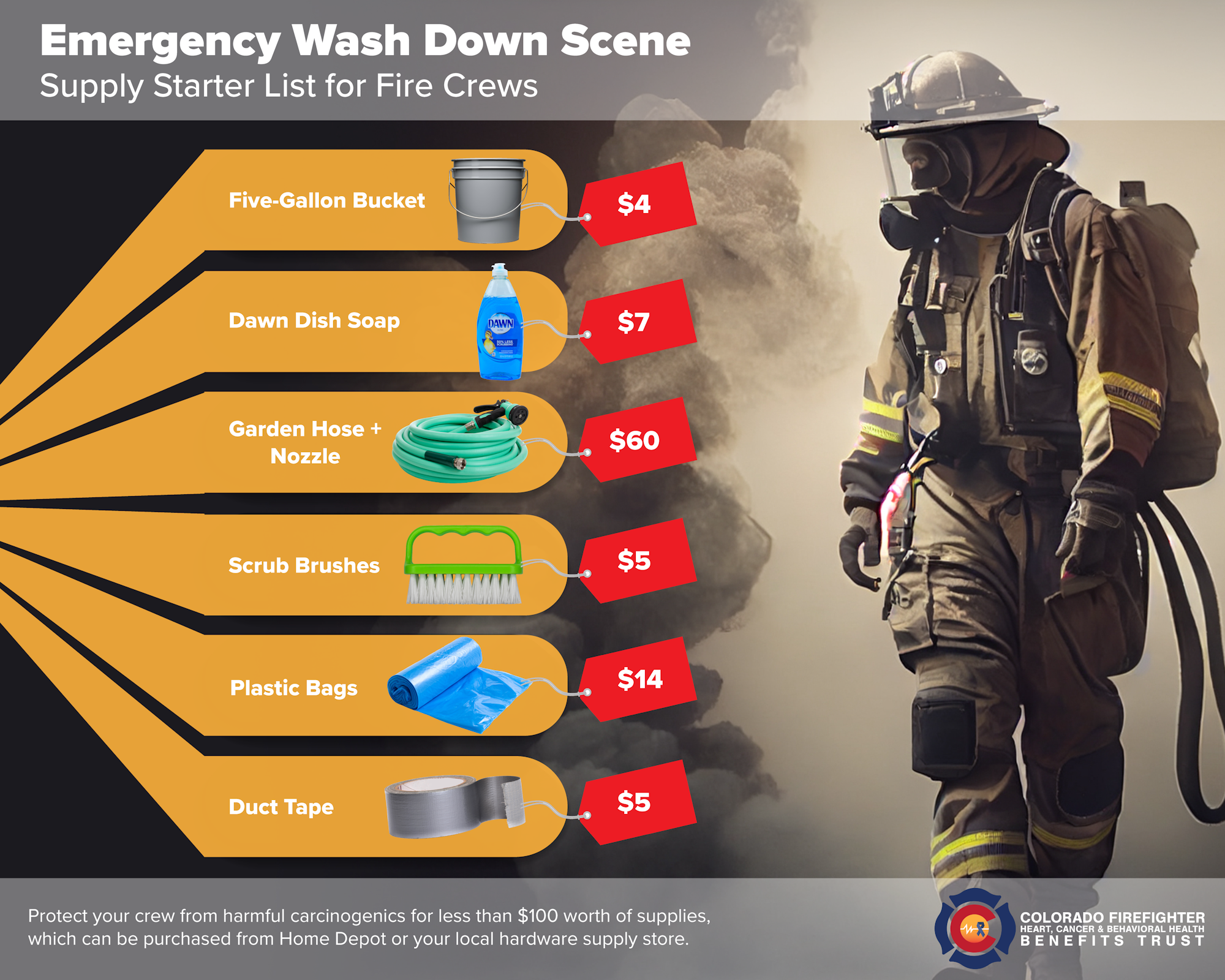
These supplies are inexpensive, easy to store, and can make an enormous difference over time. Districts that provide kits on every engine and reinforce their use after every fire create a powerful culture shift—from “dirty gear show experience” to “clean gear shows leadership.”
A wash down policy isn’t just about equipment maintenance. It’s about reinforcing a health-first mindset across the fire service. Every wash down removes harmful contaminants that might otherwise be inhaled, absorbed, or ingested. It also helps prevent secondary exposure to family members and coworkers, signaling that firefighter wellness is a department priority. Incorporating this simple procedure into standard operations, training schedules, and safety briefings helps normalize the habit and ensures compliance even on the busiest days.
The NFPA continues to research gear contamination and cleaning validation, and the evidence is clear: immediate, consistent decontamination saves lives. A few minutes spent rinsing off soot and residue can help reduce cancer risk, protect respiratory health, and prolong careers.
A Simple Step for a Lasting Impact
The emergency scene wash down may not look heroic. It doesn't require advanced technology or major funding, yet the impact is profound. By taking time to wash down gear before heading back to the station, firefighters safeguard their own health and that of their colleagues, their families, and their communities.
Departments can access sample policy and implementation guidance through FFCCS and should align procedures with NFPA standards for cleaning and PPE care.
Although the fire is extinguished, the fight for your health continues. Start every cleanup with a wash down—because clean gear saves lives.